CMEVA (Compression Molded EVA) soles are widely used in the footwear industry due to their lightweight, comfortable, and durable properties. The production process involves several critical steps to ensure consistency, quality, and performance. Below is a detailed step-by-step breakdown of the CMEVA sole manufacturing process:
Step 1: Compound Mixing
EVA compounds are mixed based on the ratio of Short Expansion (S) and Large Expansion (L) compounds. For instance, if the desired sole length is 175mm, S=165mm and L=185mm, then the final mixture is calculated as:
Mixture = (185 + 165) / 2 = 175mm
The large expansion compound ratio is slightly increased according to pre-tested recipes to ensure accurate sole length
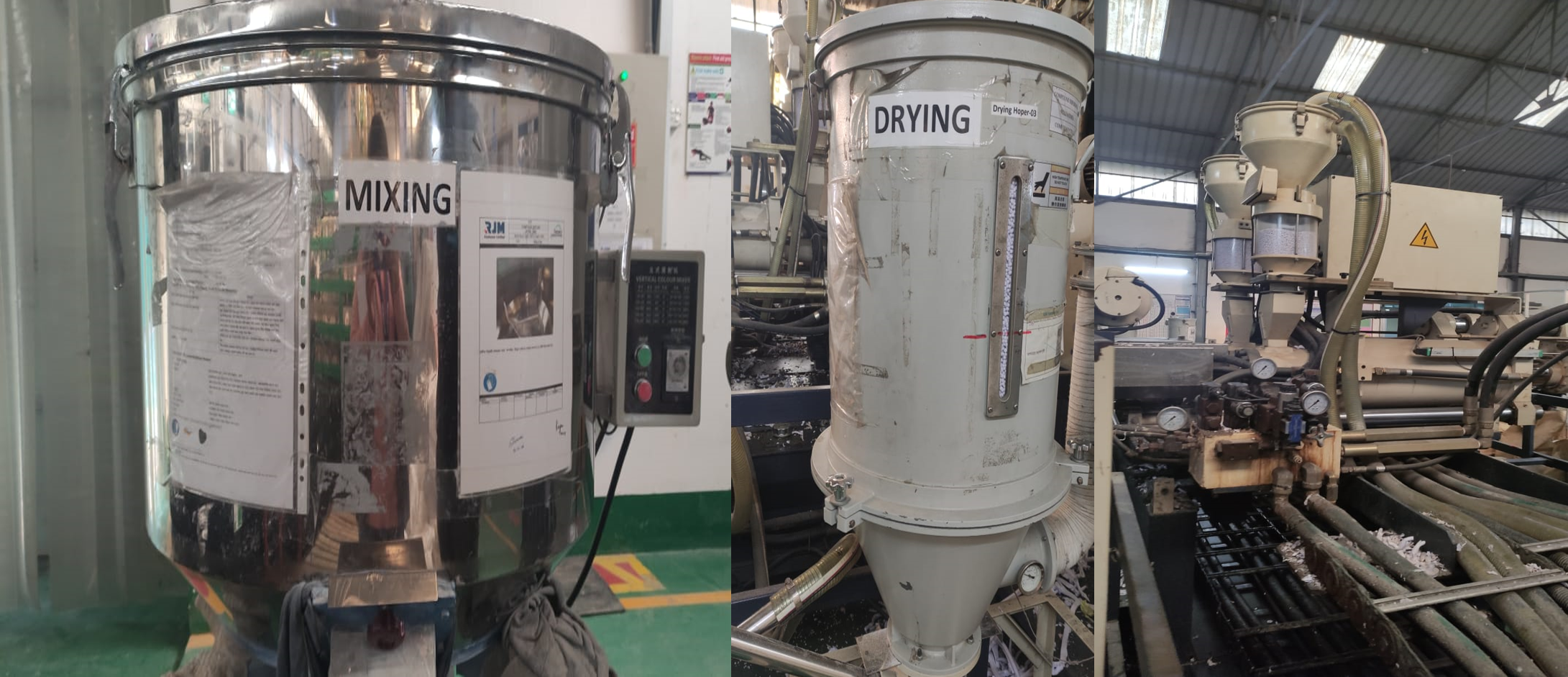
Step 2: Mixing Process
The compounds are thoroughly mixed for approximately 45 minutes to achieve a uniform consistency.
Step 3: Drying
The mixture is then passed through a drying process to eliminate moisture, as residual moisture can cause bubble formation in the final product
Step 4: Temporary Storage
Dried compounds are transferred to a storage unit known as the hopper, where they remain before being processed further.
Step 5: Injection Machine Processing
The compounds are melted and filtered through four chambers in the injection machine to ensure uniform melting and purity.
Step 6: Molding and Curing
The molten compound is injected into molds and undergoes a curing process for 300-360 seconds at a temperature of 165-175°C. Once cured, the molds are opened, and the soles are demolded. The molds are then cleaned using compressed air and silica gel to maintain precision.
Step 7: Quality Control (QC) Inspection
Excess injection points are trimmed, and the soles undergo a preliminary quality inspection.
Step 8: Cooling Process
The soles are stored for a minimum of 12 hours to cool down and stabilize their structure.
Step 9: Buffing
The surface of the soles is buffed to enhance texture and improve adherence for further processing.
Step 10: Compression Molding
The soles are passed through a Compression Molding (CM) machine at approximately 170°C to achieve their final shape and design.
Step 11: Final QC and Packaging
The soles are gradually cooled in multiple chambers of the CM mold, followed by a final QC inspection. Once approved, they are packaged for distribution
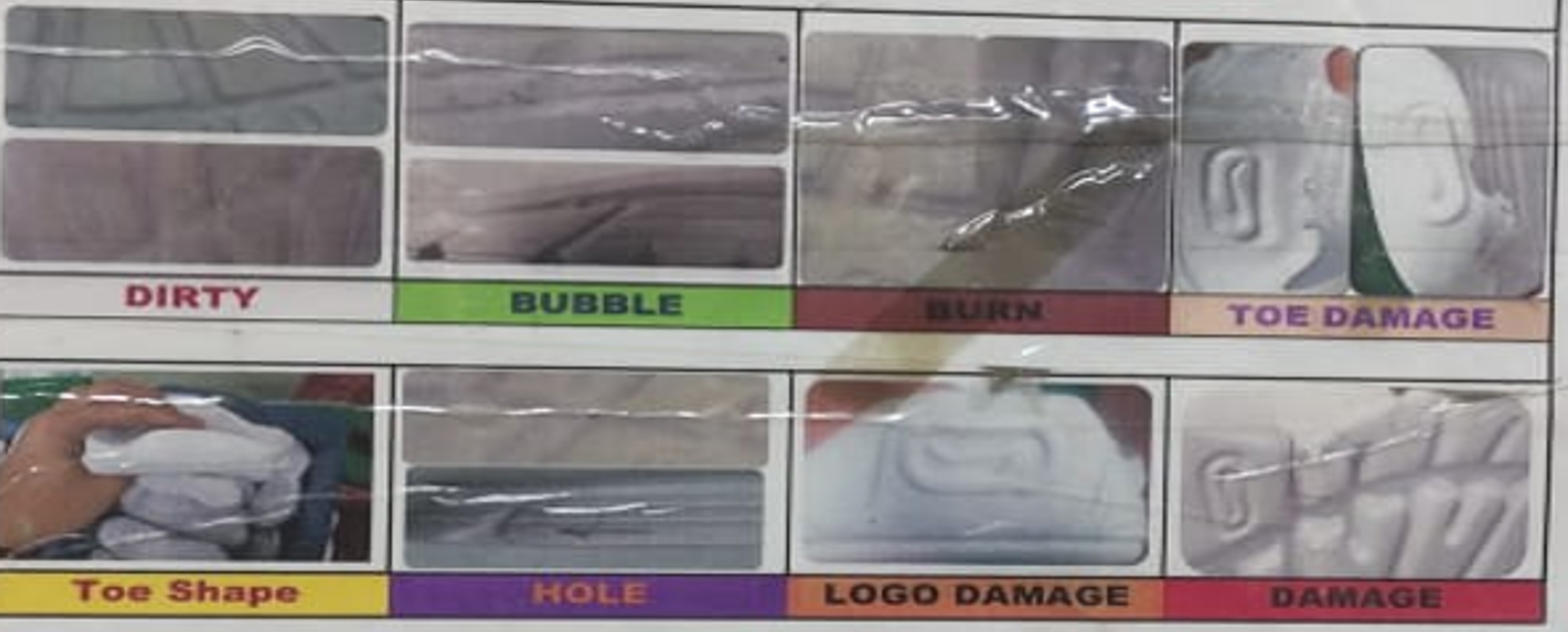
Common Defects in CMEVA Soles
- Dirty: Unwanted dirt or stains on the surface.
- Bubble: Air bubble trapped inside or on the surface.
- Burn: Scorched or discolored areas due to overheating.
- Toe Damage: Deformation or cracks in the toe area.
- Toe Shape: Incorrect or uneven toe molding.
- Hole: Unintended openings or punctures.
- Logo Damage: Blurred, missing, or deformed logo.
- Sole Damage: Cracks, tears, or material loss in the sole.