
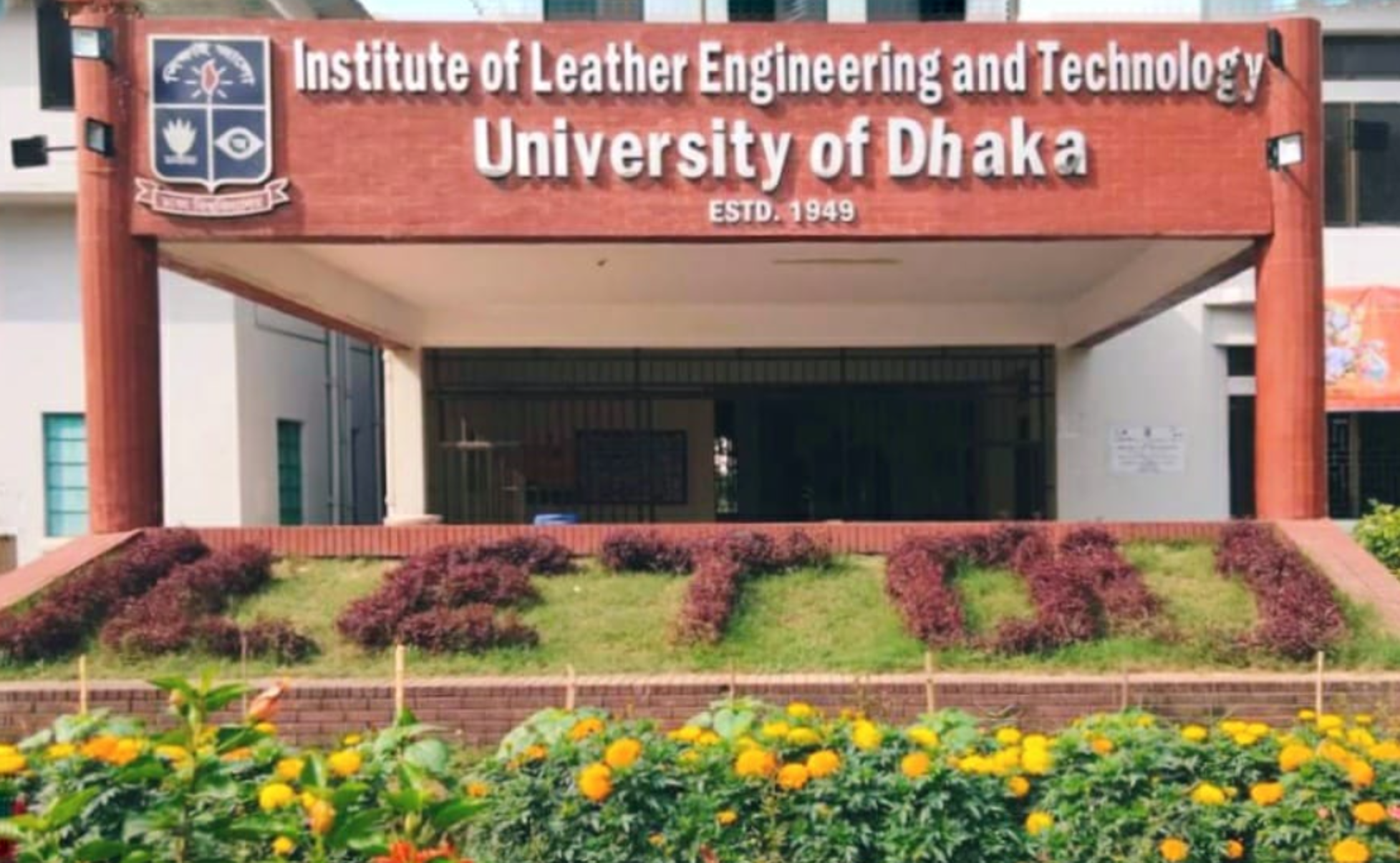
The first is through the University of Dhaka, where students must sit for the ‘A Unit’ admission test (science group). Successful candidates can then be eligible by their merit position and opt for one of three specialized undergraduate programs at the Institute of Leather Engineering and Technology (ILET):
- Leather Engineering
- Leather Products Engineering
- Footwear Engineering
These programs are located in Hazaribagh, Dhaka, and are part of the Faculty of Engineering and Technology. Each subject offers a unique perspective on the leather industry—from raw material processing to finished goods manufacturing and innovation in footwear technology.
The second path is through Khulna University of Engineering & Technology (KUET), one of the leading engineering universities in the country. Here, Eligible students after admission test can pursue a Bachelor of Science in Leather Engineering. KUET offers strong technical training with a focus on leather processing and tannery management.
A degree in leather engineering opens the door to a wide range of technical, managerial, and creative roles across the leather and footwear industry. Here’s how this specialized knowledge gives leather engineers a unique advantage:
 Merchandising – Involves coordinating with buyers, managing timelines, and monitoring order execution. Since merchandising is essentially like managing a full project, a leather engineer understands each phase of product making them highly effective in this role. Future roles can lead to the full factory project management in leading role like CEO, CMO and towards an entrepreneurship.
Production & Planning – Supervises manufacturing activities in tanneries or factories. Leather engineers are trained in the entire production process, including machine operation, material behavior, and chemical applications, which helps ensure efficiency and problem-solving on the factory floor. Future roles can Lead to GM, AGM and sometimes technical expertise led them to achieve buyer’s role globally.
Product Development – Combines design, research, pattern-making, and prototyping. Leather engineers bring both technical expertise and material science knowledge to ensure new products are innovative, functional, and manufacturable. Future role can lead them to Product Engineer, technical director as well as leading role in international fashion industry.
Quality Assurance (QA) – Ensures that products meet defined quality and safety standards. Leather engineers study product evaluation, defect analysis, and quality control systems during their education, enabling them to detect and resolve quality issues effectively. A very attractive role to work as a Leading representative of buyer in future as well as leading roles in different third-party inspections & Multinational Testing Labs etc.
Supply Chain Management – Oversees sourcing, logistics, and inventory. A background in leather engineering gives professionals insight into material handling and critical path management. Its a potential career as a future role as Strategic buyer, Global supply chain director, Even country director of multinationals etc.
Retail Collection & Chain Management:
With the rise of local and regional footwear and leather brands, many have established retail collection chains across the country. Leather engineers can build a career in managing these collections — overseeing product assortment, seasonal launches, customer trends, and inventory flow. Their technical knowledge helps align design with material feasibility and market demand. Career growth can lead to roles such as Chief Collection Manager, Retail Head, or even Global Retail Director for international chains.
Sourcing Specialists – Work with global brands or buying houses to identify and procure leather or footwear components. Leather engineers offer technical insight into product specs and supplier evaluation, which is often missing in general sourcing professionals. Future roles offer overseas jobs as well as exploring global sourcing.
Entrepreneurship – Many graduates establish their own businesses in footwear, leather goods, or chemical supply. Their holistic understanding of materials, markets, and manufacturing as well as a good networking through the community helps them build sustainable and competitive ventures. As an entrepreneurs right now a lot of Leather engineers are sharing their products globally.
Higher Studies – Opens doors to post-graduate studies in Chemical Engineering, Polymer Science, or Environmental Science, Sustainable technology, Product Management etc enhancing prospects in research or academic careers.
Government Jobs – Opportunities in Department of Livestock Services, Bangladesh Leather Research Institute, DTIEWTPVL, BSTI, Export Promotion Bureau, and other public institutions, where technical leather knowledge is in demand for regulatory, quality, and development roles.
While leather engineering offers exciting opportunities, it also comes with some challenges:
 Limited Female Representation – Despite growing inclusivity, the working conditions in tanneries and industrial plants may not always feel welcoming for women, especially in core production roles.
Factory Locations – Many production units are in remote industrial zones which may require long commutes or relocation, especially challenging for those from urban areas.
Health and Safety Concerns – Leather processing often involves chemicals and heavy machinery, requiring proper safety training and precautions to maintain a healthy work environment.
Industry Fluctuations – The leather sector is affected by global trends, trade restrictions, and environmental regulations, which can create uncertainty in job demand and factory operations.
Slow Career Growth in Some Segments:
In certain areas like small-scale factories and trading, growth may be slow due to fewer leadership roles or hierarchical bottlenecks.
A career in leather engineering is an opportunity to stand at the intersection of innovation, sustainability, and industry.
As Bangladesh strengthens its position in the global leather market, the demand for skilled, forward-thinking leather engineers is only set to grow. Around 200 students graduate every year from this unique department against the vast demand, creating long-term opportunities. So leather engineering is a promising and impactful career choice in Bangladesh.
Image Source:
Social media page of ILET and Engineers diary, LE, KUET