
India’s Union Budget 2025, presented by Finance Minister Nirmala Sitharaman on February 1, 2025, has introduced game-changing policies for the leather and footwear industry. These reforms are expected to position India as a global leader, significantly impacting its competitors—including Bangladesh.
Key Announcements from the Budget
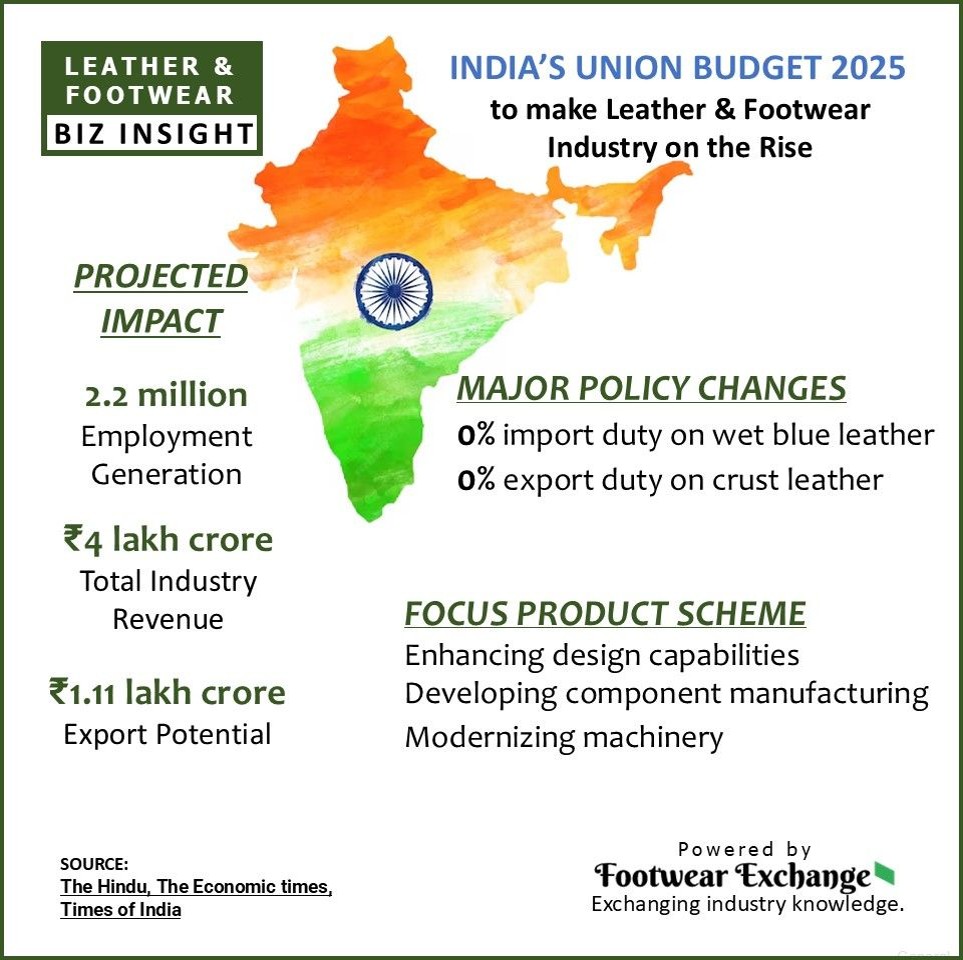
The Focus Product Scheme has been launched to strengthen three critical areas: Enhancing design capabilities Developing component manufacturing Modernizing machinery
Additionally, major policy changes have been introduced: Import duty on wet blue leather reduced from 10% to NIL Export duty on crust leather reduced from 20% to NIL
These moves are expected to boost domestic manufacturing and enhance global competitiveness.
Projected Impact on the Indian Leather Industry
 Employment Generation: 22 lakh (2.2 million) new jobs Total Industry Revenue: ₹4 lakh crore ($46.12 billion) Export Potential: ₹1.11 lakh crore ($13 billion)
According to Mr. Selvam IAS, Executive Director of CLE, these reforms will increase India’s leather exports from ₹3,000 crore to ₹8,000 crore (~USD 1 billion).
These policy changes came at the right moment during the 38th Indian International Leather Fair (IILF) 2025, where many industry leaders expressed optimism about India’s future in the leather sector. The removal of duties is expected to significantly ease operational costs and boost export competitiveness, making India a stronger player in the global market.
Mission for Cotton Productivity
In addition to footwear, the government has introduced a five-year mission to enhance cotton productivity and sustainability. The focus is on extra-long staple cotton varieties, ensuring a steady supply for India’s textile and apparel sectors. This will strengthen India’s textile ecosystem and make it more self-sufficient
Why This Matters for Bangladesh
While these policies will fuel India’s growth, they also bring challenges for Bangladesh:
🔹 Stronger Competition: India’s government-backed expansion could reduce Bangladesh’s export share in leather and footwear.
🔹 Shift in Raw Material Demand: With India focusing on non-leather footwear, its demand for Bangladeshi leather may decline.
🔹 Pressure on Innovation & Investment: To stay competitive, Bangladesh must enhance product quality, invest in technology, and explore new markets.
For Bangladesh, this is a wake-up call. With India strengthening its hold on the industry, competition will be tougher than ever. The question is—can Bangladesh keep up?