
The rebalancing of the economy is a trend fundamentally linked to economic growth and to the realignment of powers caused by the dynamics of development. Nowadays there is a profound discussion about the rising of the Asian superpowers, but what most fail to acknowledge is that this won’t be the debut of Asia as a leading region in the economic stage.
Economic growth in emerging countries
Economic growth will be registered outside the traditional developed world (US, Europe, Japan) and will be concentrated in the emerging countries (Asian countries)
Demographic dynamics in emerging economies
Demographic dynamics will be most striking in emergent economies because of a more dynamic labor market combined with economic growth and increasing purchase power
The gap is closing
Countries in the developing world are quickly catching up, not only in economic terms, but also in other aspects, such as the use of new technologies
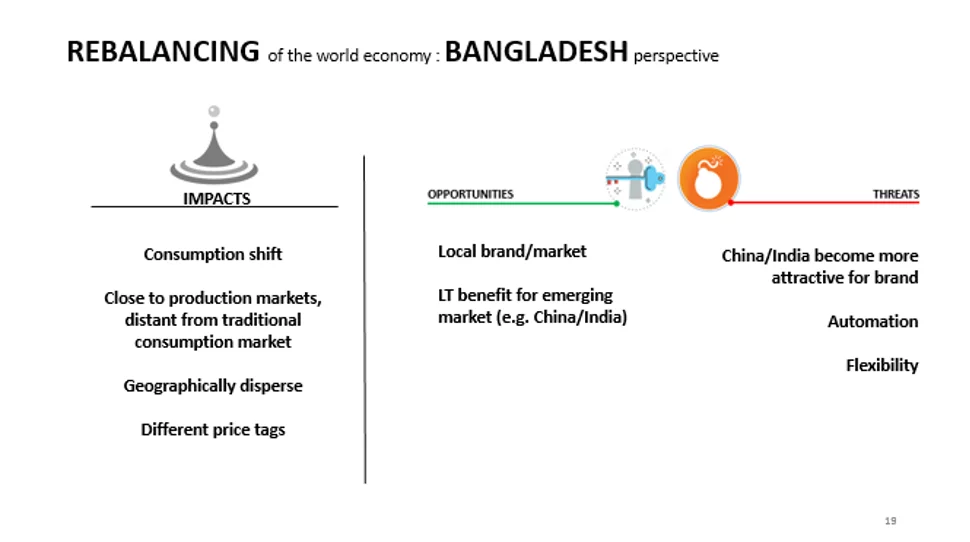
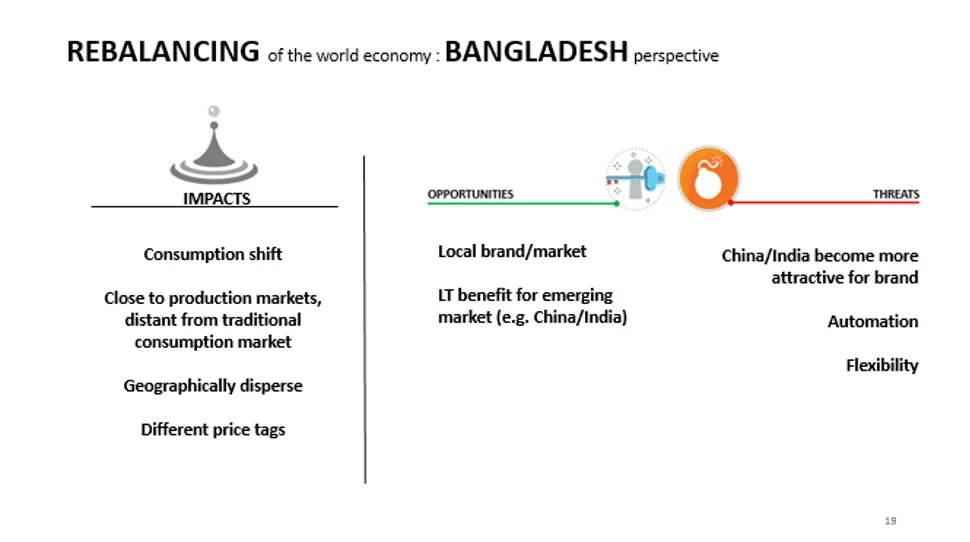
Consumption shift
Emerging markets will rise and grow, becoming attractive destinations for many companies and brands. Consumption growth will shift from conventional traditional developed markets to emerging ones
Close to production markets, distant from traditional consumption market
With the current economic issues impacting the European and American economies, companies from these countries will focus their attention on Asian markets where they already have manufacturing units, which approximates production to market. However, a close to production status will mean a higher distance from traditional consumption markets
Geographically disperse
Some of the new developing countries such as China, have markets that are geographically disperse, which requires a huge investment and a significant financial effort from companies to approach them
Different price tags
Developed economies placing their products in emerging markets will face different price strategies: they will compete with local manufacturers with low price products produced in those countries; they will position products manufactured in the developed world and commercialized in emerging markets at a higher price range.
Data Source:
FOOTWEAR CONSUMER 2030
Publish by APICCAPS 2014
www.worldfootwear.com