
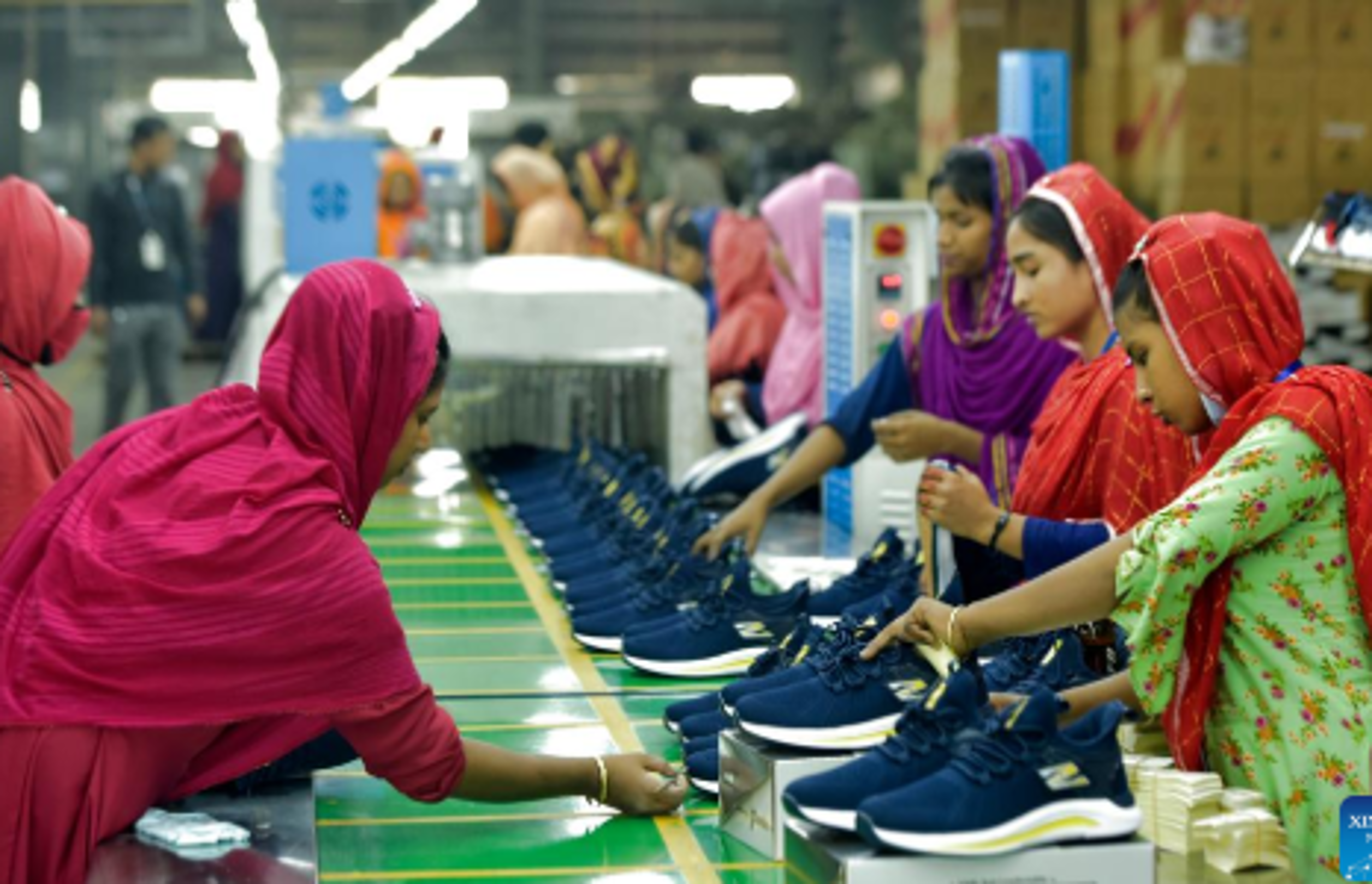
As the world observes International Women’s Day on March 8, it is essential to recognize the growing role of women in Bangladesh’s workforce. Women’s participation in Bangladesh’s workforce has been rising, but challenges remain. In the leather and footwear sector, which employs around 850,000 people, women make up over 60% of the workforce in manufacturing but remain underrepresented in leadership roles.
Growth in Women’s Participation: The Asian Development Bank (ADB) reports that women account for about 70 percent of employees in Bangladesh’s footwear firms (Hong 2018). In an interview, the Leather Goods and Footwear Manufacturers and Exporters Association of Bangladesh (LFMEAB) presented similar data, estimating that about 65 percent of workers in their members’ export-oriented factories are women. LFMEAB also noted that women are increasingly represented in footwear/leather goods management and ownership positions, including on company boards.
- Footwear Manufacturing: Women’s participation grew from 2.2% in 2001 to 37% in 2012 as well as evolved till 2024.
- Luggage and Handbags: Women represent about 33% of the workforce.
- Tanneries: Only 2% of tannery workers are women due to physically demanding tasks
Comparing Women workforce of Leather & Footwear Sector to RMG: According to the Centre for Policy Dialogue (CPD), women’s participation in the labor force has increased significantly, reaching 33.9% in 2015 from just 4% in 1974. While men’s participation increased slightly from 80.4% to 82.5%, women have entered diverse industries, including leather and footwear.
- RMG Sector: Once dominated by women, the RMG sector is experiencing a decline in female workforce participation. In the past, over 80% of garment workers were women, but as of 2023, this number has dropped to 53%. Factors contributing to this shift include the physically demanding nature of factory work, reduced interest among second-generation female workers, and increasing automation in garment production.
- Footwear Sector: In contrast, the footwear and leather goods industry has seen sustained female employment, with women making up around 65-70% of the workforce. The Leather Goods and Footwear Manufacturers and Exporters Association of Bangladesh (LFMEAB) confirms that women are not only employed in production roles but are also entering managerial and ownership positions, including roles on company boards.
To unlock the full potential of women in Bangladesh’s footwear sector, a targeted approach is needed. Encouraging women’s participation in decision-making roles will not only improve their economic standing but also strengthen Bangladesh’s position as a global leader in footwear exports. A more inclusive, supportive industry will benefit not just women, but the entire sector, driving sustainable growth and innovation in Bangladesh’s footwear industry.
Source: World Bank Documentary,
VoxDev, SEIP Website & The daily Star.